Net Proceeds > Sale Price: the 3 levers that most change what you actually walk away with (price, prep, terms)
Selling in 2026? Learn the 3 levers that drive net proceeds price, prep, and terms. Plus what it means in Santa Clarita and Las Vegas.
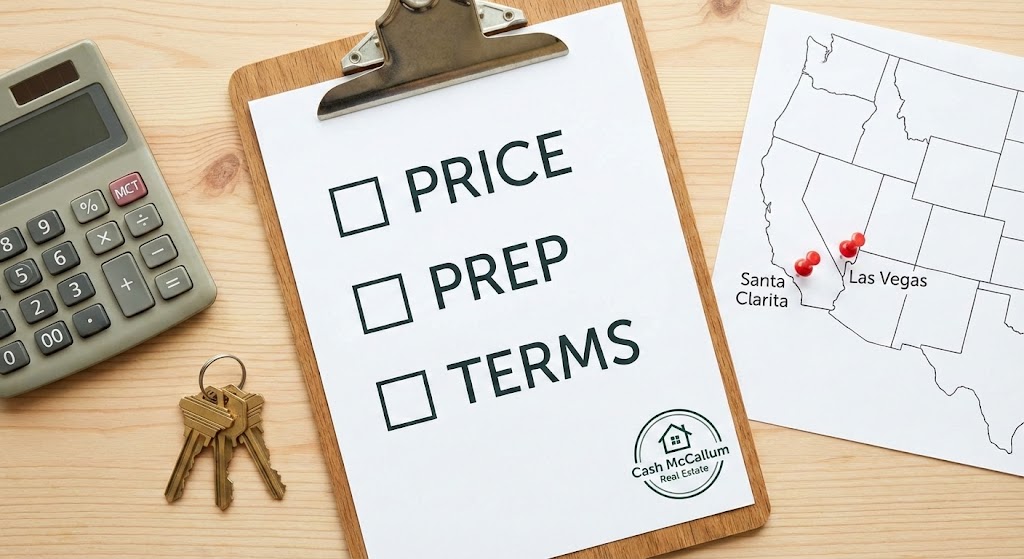
Most homeowners judge a sale by the headline number: the sale price. But your real outcome is net proceeds what lands in your account after concessions, repairs, carrying costs, and closing expenses.
In 2026, buyers are still careful. They’re comparing homes, scrutinizing disclosures, and negotiating hard when a property feels uncertain. The good news is that a strong result doesn’t come from “getting lucky” with timing. It comes from pulling the right levers price, prep, and terms in the right order.
Here’s a practical approach to maximize your net while keeping the process clean, predictable, and defensible.
1) Price is a strategy, not a guess
Pricing isn’t about what you “need” to get, what a neighbor got, or what you hope the market will do next month. It’s about what today’s buyers will pay with confidence.
A strong pricing strategy does three things:
- Attracts the largest pool of qualified buyers in the first 7–14 days (when your listing is most visible).
- Reduces “inspection leverage.” When a home is overpriced, buyers feel justified asking for bigger credits later.
- Creates clean competition (or at minimum, urgency) instead of stale days-on-market.
Practical takeaway: Don’t aim for the highest possible number. Aim for the highest defensible number supported by recent comparable sales and current competition—then back it up with presentation and terms.
2) Prep doesn’t mean “renovate” Prep it means “remove doubt”
The purpose of prep is not to build your dream home. It’s to make a buyer feel safe making a strong offer.
The best ROI prep usually falls into three buckets:
- Condition clarity: fix obvious issues that trigger fear (leaks, electrical concerns, safety items, deferred maintenance).
- Visual simplicity: declutter, deep clean, neutralize strong paint choices, and make the home photograph well.
- Confidence builders: clear documentation—permits when available, HOA info, age of roof/HVAC/water heater, and a disclosure package that doesn’t feel evasive.
One of the most expensive seller mistakes is skipping small, obvious fixes, then paying for them three times:
- as reduced buyer interest,
- as longer days-on-market carrying costs, and
- as larger negotiated credits under pressure.
*Choose prep items that increase certainty and reduce negotiation, not projects that simply increase “wow.”
3) Terms can be worth more than price
Two offers can have the same number and produce very different net proceeds.
Terms that often matter most:
- Appraisal risk: Is the buyer stretching? Are they using a loan type that’s sensitive to condition? Do they have reserves?
- Inspection posture: Are they writing “as-is” with informational inspections, or are they likely to renegotiate aggressively?
- Time: Can you align closing and possession with your next move (rent-back, longer escrow, or quick close)?
- Concessions: Credits, closing cost help, rate buydowns—these affect net and can be structured in smarter ways.
*The “best offer” is the one that closes on time with minimal re-trading. A clean deal protects your net.
What this means in Santa Clarita Valley (CA)
Santa Clarita buyers often split into two major groups: families optimizing schools/commutes and move-up buyers trying to balance monthly payments with lifestyle. That creates a specific seller playbook:
- Presentation matters because choice is visible. Many buyers have saved searches and compare listings side-by-side. If your home feels “tired” online, you’ll lose showings before you ever get a chance to negotiate.
- Inspections can be a leverage point. Even when a home is overall solid, common items (roof life, HVAC age, drainage, prior repairs, sewer line concerns in some areas) can create a credit conversation if they’re ambiguous.
- HOA and Mello-Roos clarity reduces friction. If your neighborhood has HOA dues or special assessments, get clean documentation ready early. When buyers can’t quickly understand the monthly picture, they hesitate—or they negotiate.
Seller-first move: In Santa Clarita, net proceeds often improve when you invest modestly in confidence prep (clean, paint touch-ups, minor repairs, HVAC service, professional photos) and pair it with pricing that earns immediate showings.
What this means in Las Vegas Valley (NV)
Las Vegas buyers are value-sensitive and practical, and they’re used to comparing communities with very different HOA structures, amenities, and property styles. That changes what “prep” and “terms” look like:
- Condition confidence is huge. Buyers pay attention to HVAC performance, roof age, pool equipment (if applicable), water heater, and general maintenance—especially after seeing multiple homes in a day.
- HOA rules and neighborhood norms matter. Landscaping requirements, rental restrictions, and community guidelines can directly impact buyer decisions. Clear HOA docs and realistic expectations reduce renegotiation later.
- Terms can win when price is tight. A buyer with strong financing, clean contingencies, and a realistic inspection approach can be worth more than a slightly higher offer that feels fragile.
Seller-first move: In Las Vegas, a smart seller often wins by combining simple, visible maintenance signals (service records, clean mechanicals, tidy exterior, pool readiness) with terms that minimize appraisal and inspection surprises.
FAQs
1) Should I price high “to leave room” for negotiation?
Usually not. Overpricing reduces showings and increases the odds of a future price reduction, often followed by tougher negotiations. A better plan is pricing that creates early demand, then letting the market bid you up (or at least hold firm).
2) What are the top pre-listing fixes that actually help net proceeds?
Think “certainty” first: safety items, leaks, electrical issues, HVAC servicing, obvious cosmetic flaws, and deep cleaning. Small fixes that remove doubt often outperform bigger remodels.
3) Should I offer buyer credits in 2026?
Sometimes... if it’s strategic. Credits can expand your buyer pool, but they should be structured with your pricing and your net in mind. The goal is to trade credits for a smoother close, not to give away money unnecessarily.
4) Is staging worth it?
If your home is vacant, awkwardly laid out, or competing with polished listings, staging (even partial) can increase perceived value and reduce days on market. If the home shows well furnished, “editing” (declutter + styling) can be enough.
5) How do I know which offer is safest?
Look past the price: financing strength, contingency language, appraisal risk, proof of funds, timelines, and the buyer’s overall posture. The safest offer is the one least likely to renegotiate late.
Book a consultation with Cash.
If you want the highest net proceeds, the plan should be specific to your home: pricing range, prep priorities, and offer-terms strategy. Not generic advice.
What’s My Home Worth Right Now? the 2026 Update
https://hmbt.co/pBYfJb
Get a private, data-driven value estimate plus weekly market signals so you can choose the best selling plan with confidence.
Categories
- All Blogs (43)
- Boise To Do (5)
- Cash McCallum (13)
- CELEBRATE (3)
- Fall Home Selling Tips (3)
- FSBO - For Sale by Owner (1)
- GOLF and Country Clubs (2)
- GOT GARAGE (1)
- Homes for Sale Idaho (4)
- Homes with Land (1)
- Idaho (5)
- Interest Rates (2)
- Las Vegas (2)
- MLS (2)
- Orchards (1)
- Re/Max agents (3)
- Real Estate Market (13)
- real estate talk (4)
- Relocation (8)
- Restaurants (1)
- RV & Camping (2)
- Santa Clarita Valley (11)
- SCV - Places to Explore (9)
- Sellers (6)
- Things To Do (15)
- Tips for Selling (5)
- Treasure Valley Idaho (8)
Recent Posts





GET MORE INFORMATION